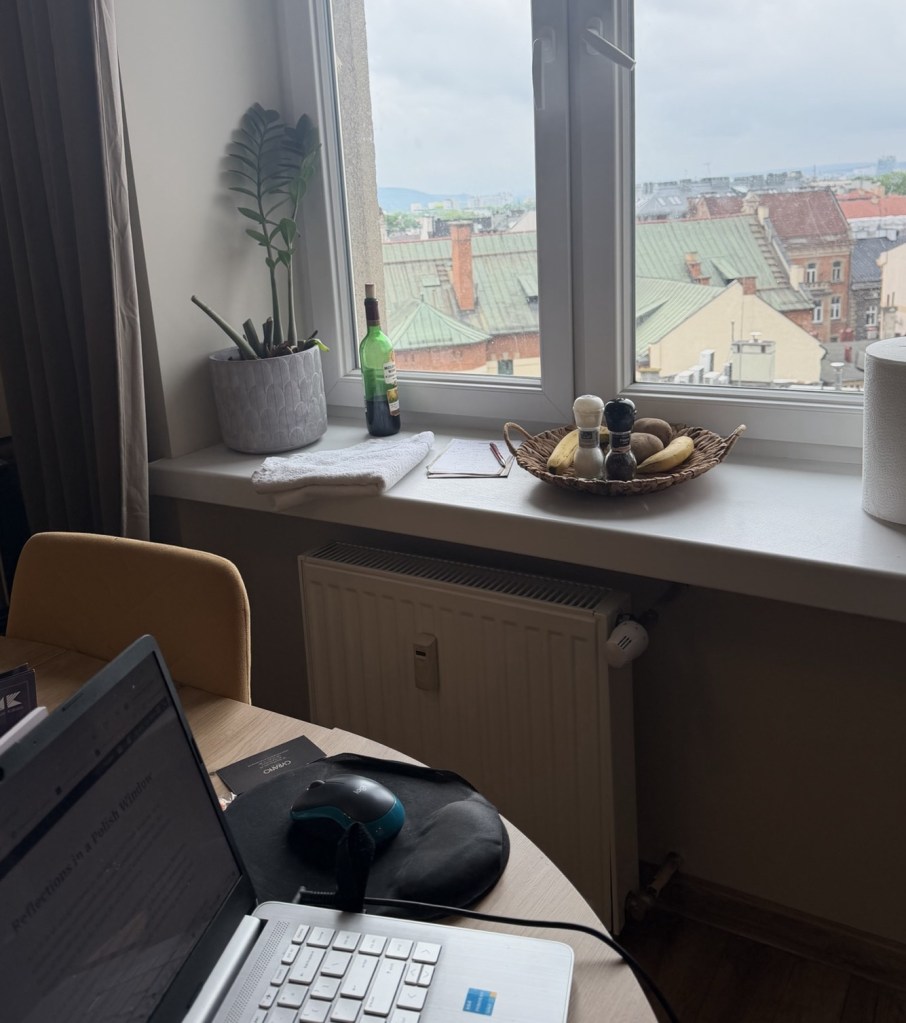
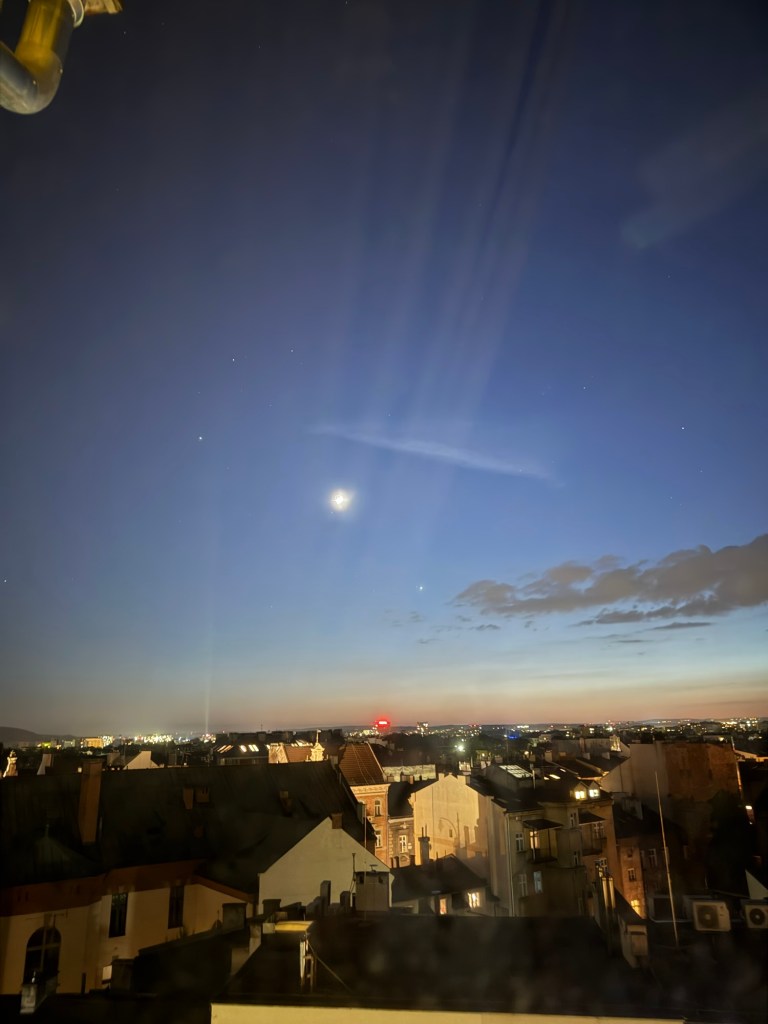
As I sit in an old apartment on the edge of Old Town Kraków, by a window looking out towards the distant southern mountains, the sweet buzz of the old city drifts inside towards me and I am filled with a sense of melancholy. It’s a feeling that runs deeper than the Polish blood in my veins.
It is a rainy Monday afternoon, and I am filled with complex emotions I need to navigate carefully, without dumping them too unceremoniously into this blog. I have only one full day left in this immersive and unforgettable country. A country of people who belong, in some way, to part of me.
A sense of the familiar has rested resolutely and with certainty on my shoulders since the day I arrived.
So, with my trusty laptop powered on, I am letting my fingers dance through the thoughts that have whacked me, stroked something deep in me, and beguiled me since the day we arrived.
Poland offers a lot . It is sophisticated, safe, fascinating, and a melting pot of culinary and historical significance and sightseeing. It has it all — museums, rivers, trees, and a treasure trove of restaurants, cafés and bars. Its people are exactly the right mix of friendly, sincere, gentle and efficient.
They are truly my sort of people.
All bias aside.
Nearly everywhere we have been — and we have done a lot in the last fourteen days — there is a lovely honesty that lets you know straight away that if people are friendly and polite, they mean it. They are not looking for a tip or a good review. They are simply good people, and despite what many of them have been through, more commonly the older people, they have a zest for life that is abundant and energising to walk amongst.
Many speak English, which is another big plus, and I too have tried my best to speak Polish — well, maybe a lukewarm best — or really just to communicate a few phrases in Polish. Usually from my cheat sheet. I have figured out over and over again from the puzzled, then mildly humoured expressions, that trying to sprout Polish sayings from memory usually ends up as gobbledygook, possibly sounding more Chinese than Polish.
But still, I think they appreciate the effort.
Or so I have convinced myself.
My sister-in-law said to me recently, just before we left for our trip, “Louise, you must be in a constant state of flux, with your scientific, detail-obsessed brain clashing up against your more dreamy, artistic and creative brain.”
One side wanting to waft down the street like a multi-coloured butterfly, finding hidden meanings and layers of emotional nuance in every flower, while the other side of my brain is counting how many butterflies there are and trying to figure out how long ago they emerged from their cocoons.
And she was so right.
It was the first time anyone had used such a simple phrase to weigh up my tendency for meandering midstream conversation. And of course, given this is one of my new sisters-in-law, partnered up with one of my very intellectually and scientifically gifted brothers, naturally my ego was happy for me to nod, agree, and accept a little bit of that scientific gene acknowledgement as definitely my cross to bear as well.
Although…
I have my doubts.
Anyway, before I go off and meander any further.
For context, I am in Kraków, and tomorrow is our last full day before we fly to Prague for a few days.
Poland has not only exceeded my expectations in every way, from town to town — Warsaw, Gdańsk, Toruń, Wrocław and now Kraków — it has beckoned me to come back. Every town, as I left it, made me a little sad, and I silently reassured myself I would return.
Not just because of the incredible family research and connection perspective, but because this is Europe in all its glory and frankly at this point of time – at its very best.
And girls, the shopping is fabulous, and so are the prices.
Not every restaurant is cabbage, pierogi and sausage, though we have given all three a red-hot go and are still working on full cultural surrender, with the occasional detour into Italian or Asian along the way. The vodka, on the other hand, has found its way into my Polish heart and slid down my Polish throat a little too enthusiastically on a few too many occasions.
I guess I will have to deal with that later.
In the meantime, Poland has surprised us with rows and rows of restaurants offering abundant cuisine from all over the world.
When we first arrived in Warsaw, as per my earlier blog, we were both battling a virus. Coughing and energy deficits. My poor husband Les, who is also immunocompromised, has copped it the worst. So unfortunately, he has had to sit a few day trips out and rest. I have also been average, but not worse than a bad cold.
Both of us have been prone to coughing bouts that had us concerned we might be ejected from somewhere, and some of the glances we have received were clearly from people wishing they had their hands on the eject button.
Since Covid, someone said to me, “Coughing has become the new farting.” But after the ferocity of this night-time coughing we have picked up, quite honestly, we both think we’d be more content to suffer from the latter, if only it meant we could have a good sleep. Farting while asleep , after all – is really only problematic for the person beside you if they happen to be awake.
So yes, we are tired.
As I write this, we have returned from a Polish doctor’s office. She was excellent and easy to see, and we are both now on a plan. So far there are no fevers. It is a matter of rest, hope, and waiting for one solid immune system and one rather dodgy one between the two of us to sort ourselves out and get well enough for the rest of the trip.
So, holed up in our rather delightful old-world apartment at the edge of the Old Town of Kraków this afternoon, with the sound of a very old barking seal — probably a chain-smoking one — emerging every two minutes from the bedroom, the laptop is out, and I am off.
Looking back, but also forward.
On our last day in Warsaw, we had a slightly teary farewell with my newly acquired big brother.
What a deeply special week it had been. One I will never forget. Filled with serendipitous moments that I will cherish forever.
Both of us, newly connected brother and sister, connecting and learning up close about pivotal places in our father’s, grandmother’s and grandfather’s history.
My grandmother, Natalia, who remained in Poland for the rest of her life after our father fled in 1963, had an extraordinary story of her own. I feel quite compelled to understand her especially. She never knew she had a granddaughter, and this alone makes me want to feel, in some way, that I am reaching out to her.
Natalia lived behind the Iron Curtain until it collapsed in 1989. Despite a warm invitation from her only son to join him and his family in Queensland, she chose to remain in her beloved Poland, living out her final years in a country recovering from communism but — at last, finally free.
She was only nineteen when she had my father, two years before Germany invaded Poland. He would be her only child, just as I was nineteen when I first became a mother. Only three years later, she was a starving widow who, along with her baby son, would come close to death herself, over and over again, for many years.
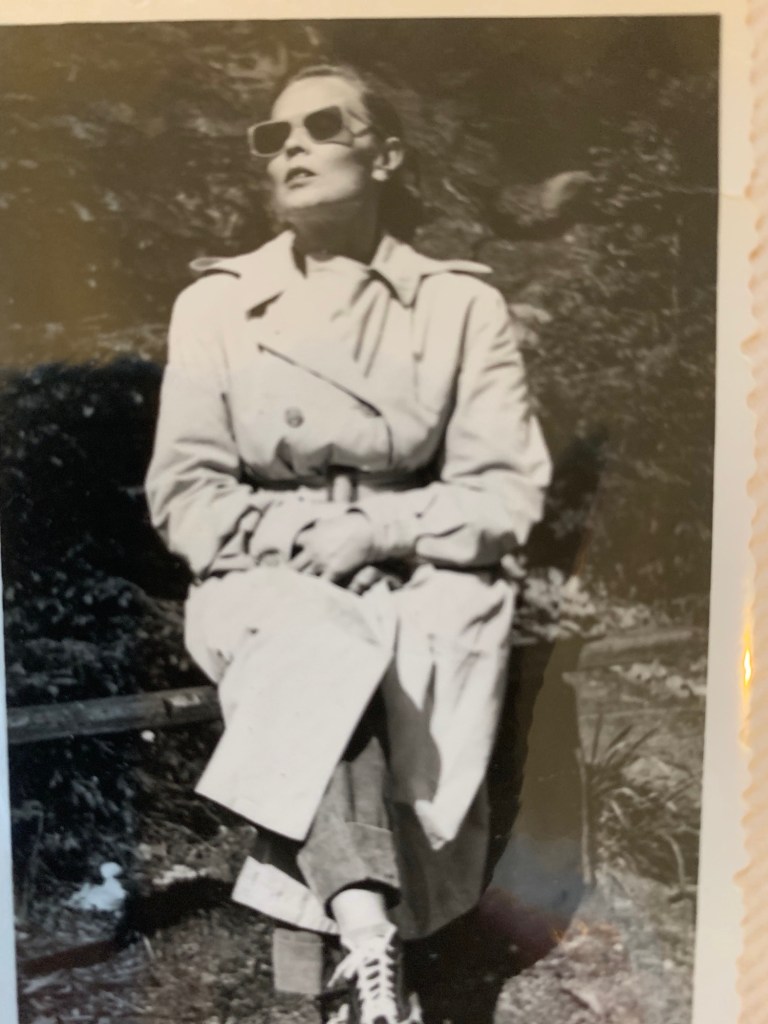
She also accomplished an extraordinary career in STEM for herself, in one of the toughest periods of history, and undoubtedly one of the hardest countries in which to achieve that. My brothers have recently discovered radio interviews and a book she is mentioned in, and we now understand that she was the first woman in Poland — technically, perhaps all of Europe — to be a radio technician.
This career, which she started as a young woman before the war, held her in good stead during the pre-war and post-war years, but also in the years she, her mother and her son were entrapped in Siberia. The Russians made use of her skills on their own radio towers, and we have come to learn from her own memoirs, and stories passed from my father to his sons, that this skill, along with the savviness of her Ukrainian mother, is directly attributed to their survival.
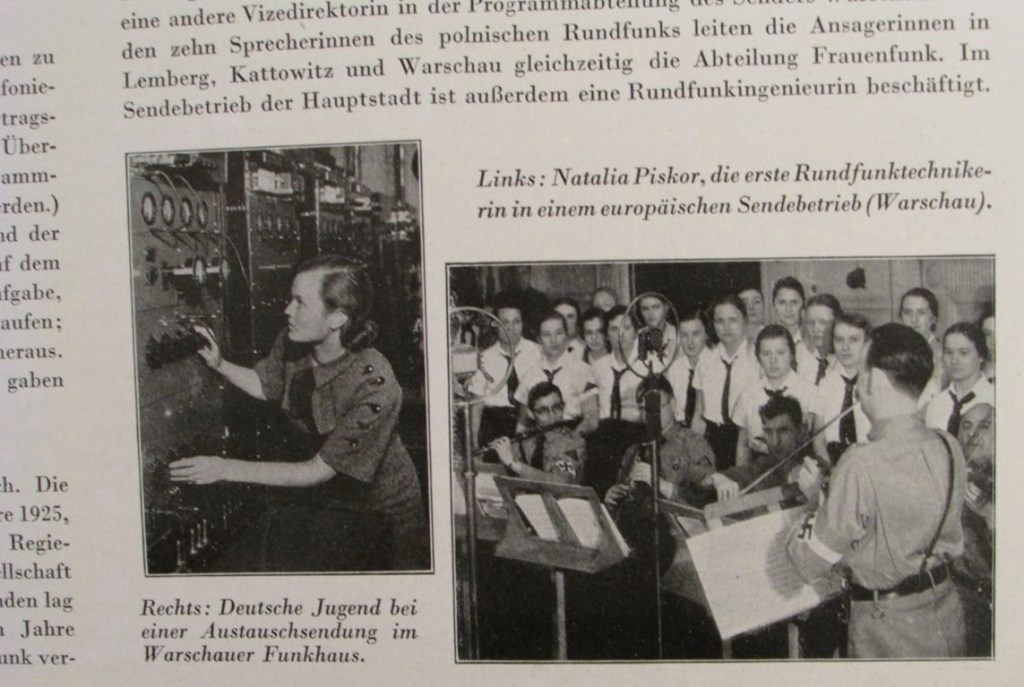
So my scientific brain, which I would like to claim more readily than I am honestly able, might not even have formed if not for my grandmother being a woman ahead of her time, establishing a successful career and navigating the world as a single mother.
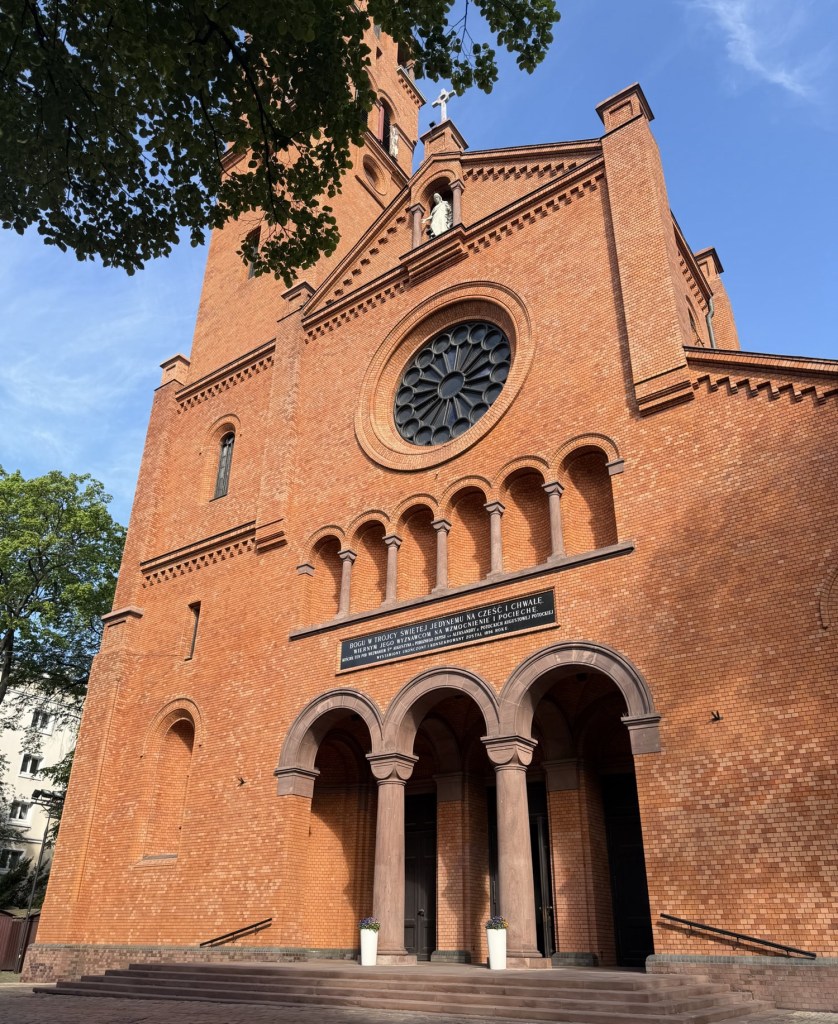
So when my brother and I visited the church she worshipped in for the latter part of her life and sat in on a service, needless to say it was emotionally charged for both of us.
We sat side by side, immersed in the soothing words of the sermon from the Polish priest as they reverberated around the walls of that beautiful old church. We did not understand what he was saying, but we felt warm and united, his words and the prayers settling around us like a soft, comforting blanket.
We sat there absorbing the significance of where we were and what it meant. Not only as two newly connected siblings, but as the children and grandchildren of people whose lives had been shaped by suffering, faith, endurance and exile.
Our father and grandmother were both deeply Catholic, and their faith was not a small or occasional part of their lives. It was central to who they were. It travelled with them through war, separation, Siberia, hunger, fear and loss. It held them through the impossible years, and it remained with them into later life, when so much else had been taken, changed or left behind.
Sitting there together, in a church that had clearly mattered deeply to her, we understood a little more of what that faith must have given them. For people who had endured so much, Catholicism must have been more than ritual or habit. It must have been shelter, structure, memory and hope. A place to put grief when there was nowhere else for it to go. A place to speak to the people they had lost. A place to keep going.
We have one photo that shows our late father sitting alone in that same church the year she died. We can see the back of his head, shoulders slumped slightly forward, the same black-and-white tiled floor beneath him as he farewelled his beloved matka.
And now, all these years later, there we were too.
His children, unknown to him and to each other for most of our lives and all of his, sitting in the same church, feeling the weight and wonder of it all. It felt almost unearthly, but also very real, as if loving hands had come to rest gently on both our shoulders.
The tears that fell on each of our cheeks felt warm and full of gratitude.
Afterwards, we walked to the block of modest flats she lived in, and then on to the cemetery where she is buried. With few words exchanged between us, we went about cleaning the headstone and placing fresh candles and flowers there.
A few words spoken to our unknown Babcia.
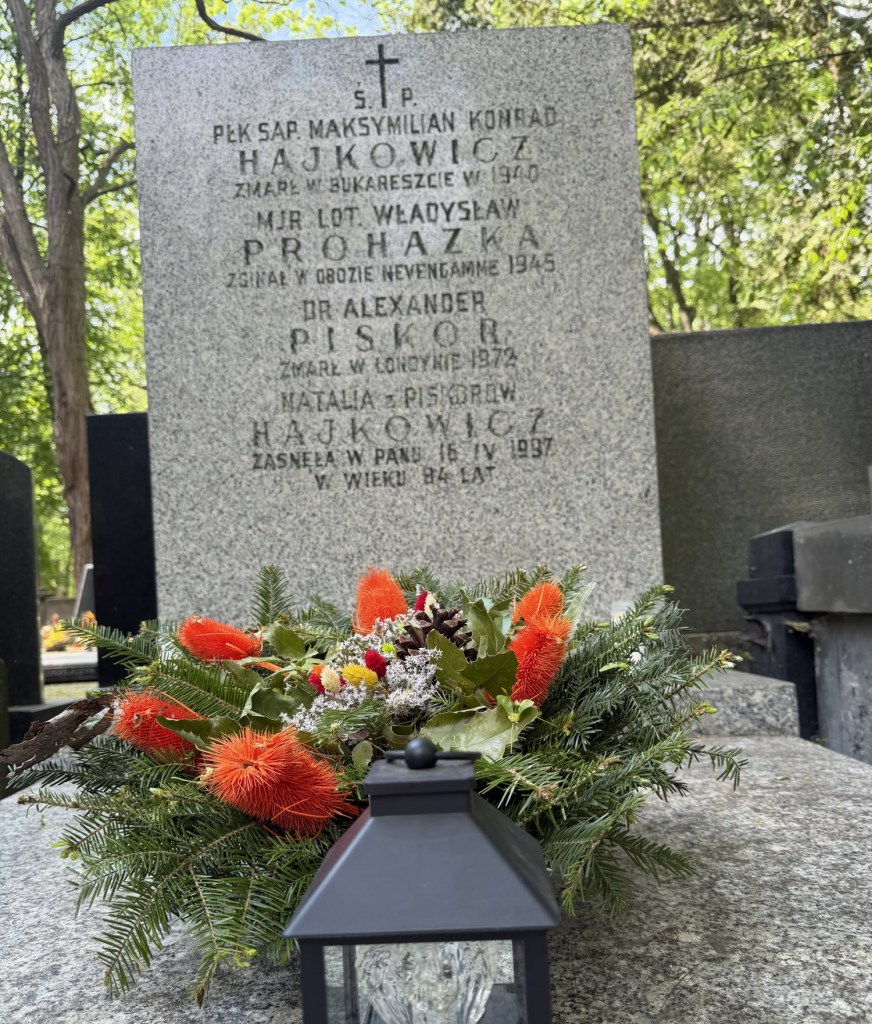
Les asked me, “Was there a day or an experience that stood out more, when you thought you could sense their presence?”
It was an important question.
And this was the day.
Although, in a lighter moment, we did wonder if either our father or grandmother were looking down on us that day — as we sat in on the service and tended her grave — perhaps asking each other who on earth we actually were.
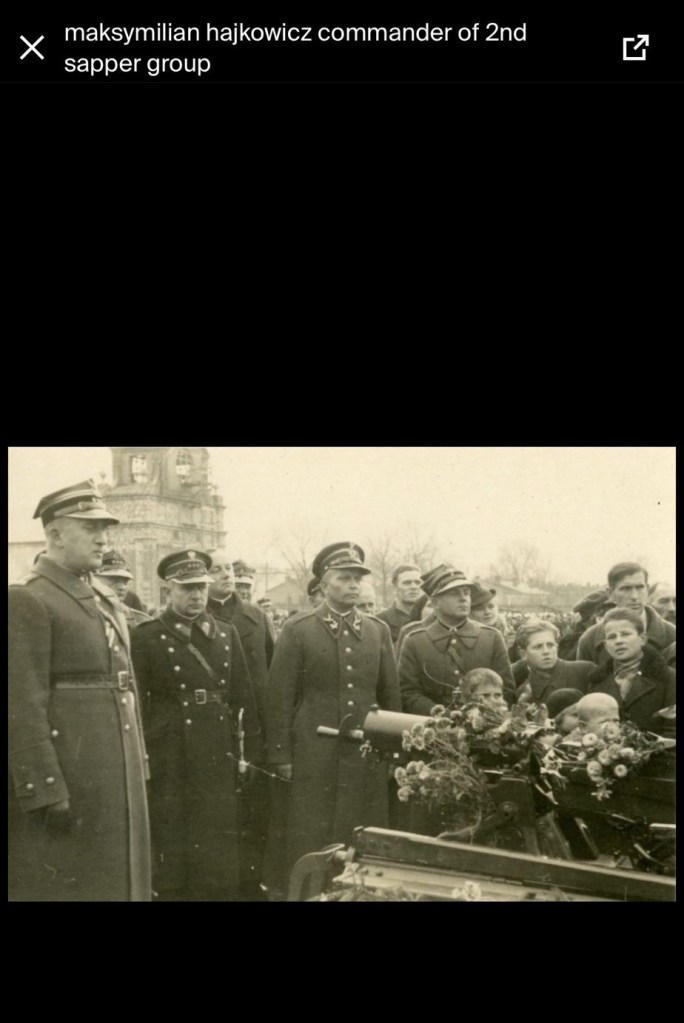
We also had a day paying homage to our grandfather. He was a colonel of sappers in the Polish Army and is recognised on Wikipedia as a war hero. When Poland was invaded in 1939, he, his beautiful young wife — my grandmother — and their baby son lived in an impressive apartment in Warsaw. Their lifestyle had been quite a socially esteemed one. Sadly like more than 90% of Warsaw that apartment and nearly every other persons home and business were completely obliterated by the Nazis during World War Two. The Polish people have done a truly remarkable job of rebuilding their beloved city . Often relying on post cards and old photos to restore with as much originality as possible.
The three of us also took a taxi out to Modlin Fortress, on the outskirts of Warsaw, to stand inside one of the great military strongholds connected to Poland’s long and battered history. Modlin is one of Poland’s largest fortress complexes and was defended through several conflicts, including the German invasion of 1939, when it became one of the last Polish strongholds to surrender.
As we climbed the tower and looked out across the broad sweep of land and river below, we learned more about the hardships endured by the Polish military across generations of war, occupation and resistance. It gave another layer of weight to our grandfather’s story, and to the courage of those who kept fighting for Poland, even when the odds against them were almost impossible.
He wrote a diary in his own hand that describes his thoughts and circumstances from September 1st, 1939. Amazingly, many years later, that same handwritten diary made its way from across the world to London and into the hands of his only son — my father.
It is a heartbreaking but beautifully written account of what he saw and experienced in those first days as he managed to flee Poland, find refuge for his wife and son, and face the few remaining months of his life as he endeavoured to get to France to keep fighting.
He died in Romania, in a camp, on the 16th of February 1940.
It was not long after this that the Soviets knocked on my great-grandmother’s door in a small village and forced them into cattle wagons for the long journey to Siberia.
So, for me, aside from being a fabulous city, and one I will come back to one day, Warsaw connected me in ways I can only begin to find the words for in this blog.
But eventually, it was time to say goodbye to the first and most impactful leg of our journey in Warsaw.
We packed our bags, collected the hire car, and slowly began to shift from the deep emotional intensity of Warsaw into the first proper leg of our Polish road trip. There was something symbolic about it — leaving the city of our family’s war stories, prayers, losses and beginnings, and driving north towards the Baltic coast.
We bid farewell — or rather, see you soon — to my big brother as he headed back to his London home, and Les and I pointed the car towards Gdańsk.
The road opened ahead of us, and with it came the feeling that the trip was changing gears. Warsaw had asked us to look back. Gdańsk, we hoped, might let us breathe a little.
We were ready for some lighter moments and more indulgent European vacation food, wine and ambience — the things we have loved on our travels.
And on the first day we arrived, Gdańsk did not disappoint.
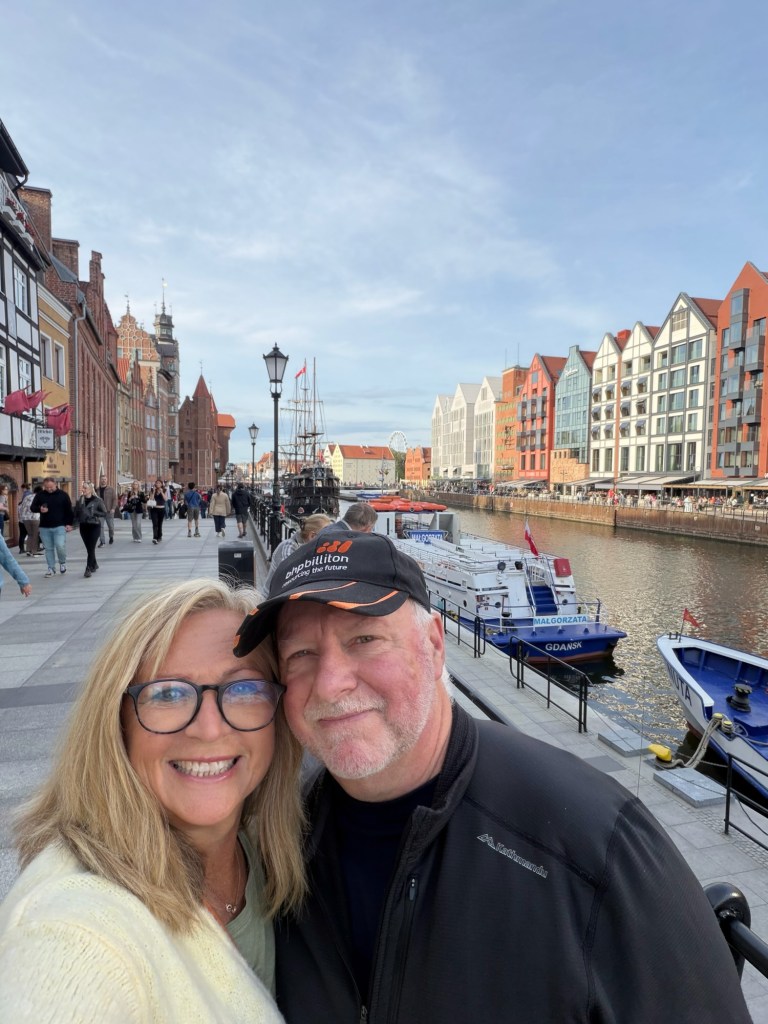
A gorgeous, colourful waterfront Old Town, with all that is needed to romanticise Europe at its best, greeted us from day one. We were starting to feel better too, so there was much to celebrate.
What we didn’t expect, but are still so grateful to have experienced, was the steep historical learning curve we gained in this seaside Baltic town, where the birth of the amber trade began and where the Solidarity movement began before spreading far beyond Poland. We knew about the Wall coming down in 1989, and we knew about the collapse of communism, but we didn’t know how complex and brilliantly constructed the whole process was.
The Solidarity museum delivered us yet another big emotional punch and a serendipitous stroke.
So while, like in Warsaw, we ate and drank like kings and filled our traveller hearts with all the juicy stuff we cherish in Europe, Gdańsk gave us a little more to drink from the cup of Poland and its treasures.
Then we travelled on to Toruń, a quieter but very medieval-style town, and then on to the impressive big city of Wrocław. Both delivered in different ways for different reasons, but our eyes had been on what multiple people told us would be the highlight — our final five nights in Kraków.
And yes, they were right.
Kraków was largely spared the physical destruction of Warsaw and some of the other cities we had visited. Arriving with resurrected head colds was not exactly part of our plan, but we have soldiered on. And, as in any sensible travel plan, when feeling a little fatigued and yo-yoing around with a cough and head cold, the most sensible thing to do on the first day, to cheer up and recover, is obviously to go on a ten-kilometre, seven-hour visit in the cold, wet rain to Auschwitz.
Also excellent for my introspective brain trying to switch gears and write about less emotional subjects and get into the practical travel part of this blog.
Well…
Unsurprisingly, that didn’t quite work.
But with our days in Poland running out and Prague beckoning only two days away, we have recalibrated, focused on resting to get better, and absorbed the heartbreaking and important visit with all the respect and understanding it deserves, as we move back into a more lighthearted take on this delightful city.
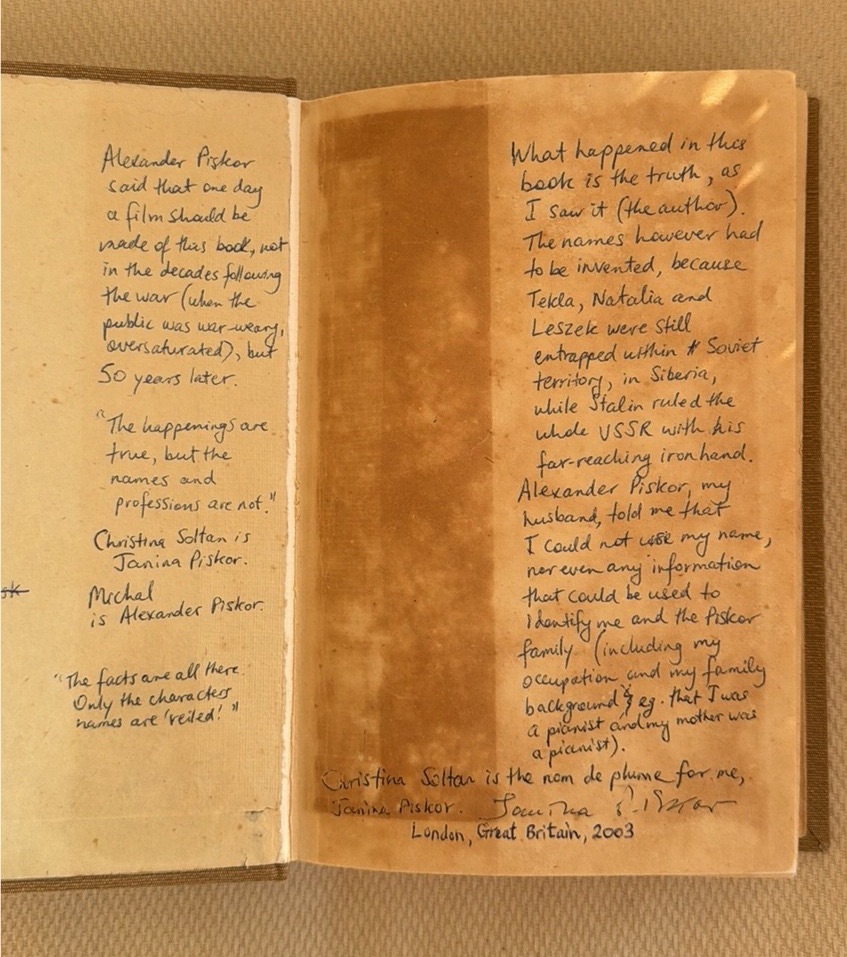
In my newfound Polish family, it turns out I also have a Polish great-aunt — by marriage to my grandmother’s only brother. Her name was Janina Piskor, and she was a pianist from Kraków before the war.
While on the run with millions of other Poles after Germany invaded from the west and Russia from the east, she met and fell in love with a fellow Pole. He is my great-uncle, and somehow the two of them survived the ordeal via many other countries, including Japan, before eventually settling in London with a bookshop.
Janina wrote a novel in 1948 called Under Strange Skies. There has only been one old copy in the family, and I decided to read her novel before this trip. It was a book I ended up devouring, every word of it, and she has become another strong woman I want to know more about.
So Kraków has also become a destination for me to gain a connection to her.
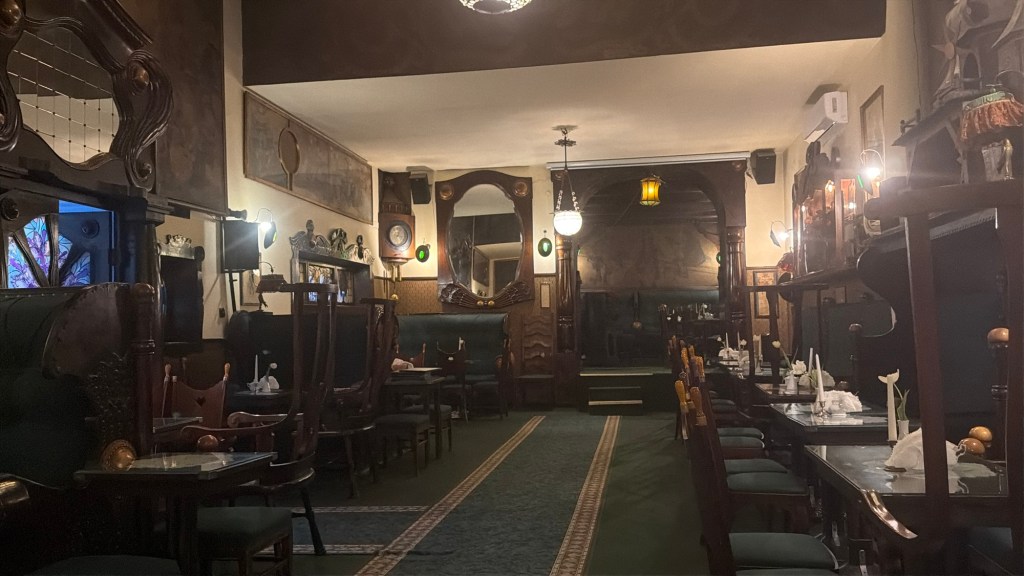
Les and I found ourselves sitting in a dimly lit, old-world underground wine bar on our first night, and I read aloud some of the pages from that 1948 novel, where she describes sitting in Jama Michalika, near the main square of the Old Town in Kraków. She describes the place as a favourite meeting place for writers, musicians, artists and the general creative community of Kraków at that time.
Sipping our cocktails on that drizzly evening, warm and snug, I said to Les, “Have I read enough? Do you want me to stop?”
“No, not at all,” he said. “Please keep going.”
So for the next little while, the two of us sat there, me reading with a steadier voice than usual despite my cold, and Les beside me taking in every word.
When I finished, we sat quietly, and Les eventually said, “How amazing would it be if that café still existed?”
And in that moment, despite it not being remotely likely, I knew in my heart that it would.
The longest-running artistic café in Kraków, still to this day called Jama Michalika.
Needless to say, the next morning, once Google had confirmed its survival, we made tracks and found the old gem very quickly, tucked close to our apartment. As we wandered in, piano music drifted through the ornate old-world rooms, past stained-glass internal windows, framed photos of past patrons, and artistic sketches lining the walls. We were both overwhelmed with enthusiasm, and felt again that some deeper guiding hand had brought us there.
As we sat there, drinking coffee in one of the oldest surviving continually running cafés in Kraków, I could almost feel the sweet presence of those who had gathered there long before us. The echoes of laughter, conversation, longing, grief and small triumphs from times so long ago seemed to drift gently through the warm spaces around us.
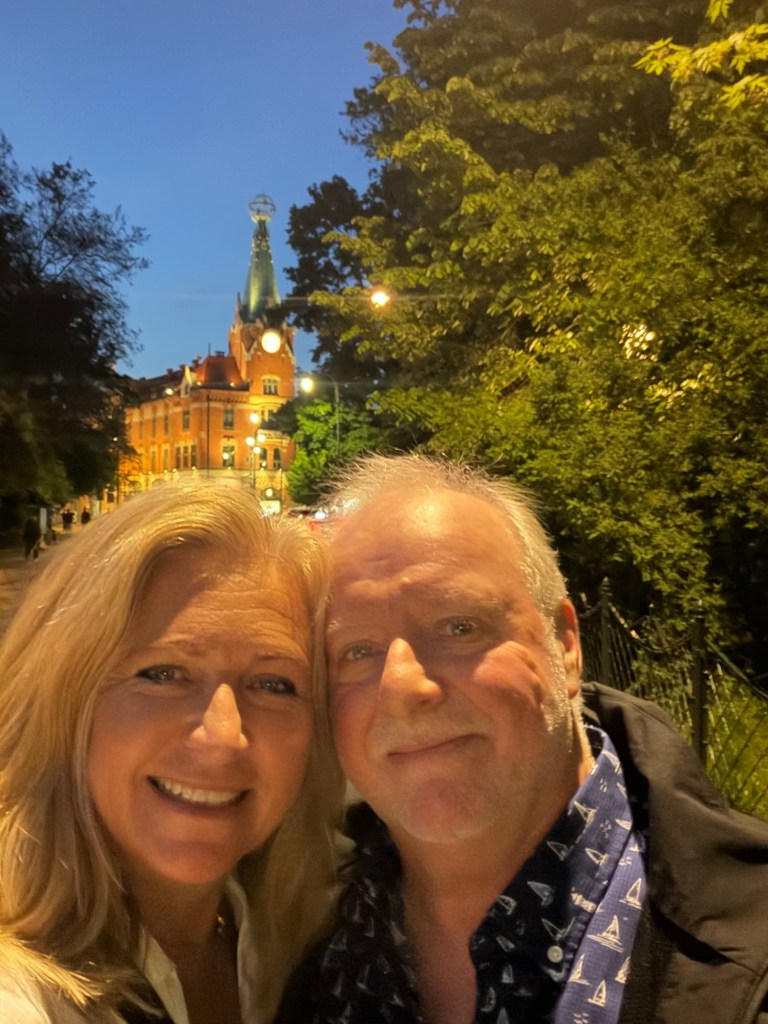
This journey has also reminded me how many of life’s most meaningful moments arrive quietly between husband and wife — not always as grand declarations, but as shared glances, tired laughter, meals, wrong turns, and the simple act of being side by side. They are the moments that keep us connected and add, layer by layer, to the depth and abundance of our gratitude for our lives.
Just like the beautiful church service in my grandmother’s church, sitting beside my newfound big brother, and reading to Les in a magical dimly lit wine bar called Cyrano, this trip has had an abundance of special moments, but these three stand out and feel worthy of this blog.
Still, we have one more full day.
And who knows what tomorrow will bring.

 Louise Mace - Writer
What a trip Lou!………I feel like packing my bags and visiting Poland (although I wouldn’t feel the depth of your familial connection of course). I am so happy for you and Les that you are having such a meaningful experience. Happy and safe travels. Fiona x
LikeLiked by 1 person
Beautiful writing Lou – I’m so enjoying your blog… can’t wait to talk to you about it when I see you xx
LikeLiked by 1 person
Thanks for sharing all these intricate reflections Lou, including the more emotionally-charged moments and connections to our shared family history. I liked the way you wove facts from the lives of Tekla, Maksymilian, Natalia, Lech & Janina through your accounts, making it more personal, more poignant than just a travelogue.
I’m glad you & Les took the time to visit parts of Poland outside of Warsaw. Krakow as you know was the old medieval capital and seat of the Polish royalty for many centuries. Gdansk was the birthplace of Solidarność (Solidarity), and while only incorporated into Poland after the war, is very significant in the modern history of the nation.
I’ll re-read your blog on a non-work day when my head is hopefully clearer. In the meantime, I hope you & Les can kick the cough & have some less intense vacation time in Central Europe.
LikeLiked by 1 person
thanks Alex . It’s been quite cathartic in a very pleasurable sense to indulge myself in taking time out to write these blogs . Very very grateful to you and Stef and Krispin for inspiring and supporting me in this journey
LikeLike
Oh Lou, your family story is truly amazing. Thank you for sharing your heart and family with us. A beautiful read xxxxx
LikeLiked by 1 person